What’s NOT Included in Your Homeowner’s Policy

white and brown concrete building

Photo by Milly Eaton on Pexels.com


Homeowner’s insurance protects your property, your investment, and your future, but not all coverage is automatically included in a standard homeowner’s insurance policy.  At Peter B. Crilly & Associates, we take the time to explain to our clients what is covered in a standard homeowner’s policy. Some types of risks, such as liability or flood, can be protected, by purchasing additional coverage or an additional policy. Damages that arise from maintenance issues, due to poorly maintained property are not covered by homeowner’s insurance.

It’s important to fully understand  what your homeowner’s insurance policy covers and what it doesn’t cover.  Taking the time to review your policy now, can save you  a substantial amount of money later.

1) True Value of the Structure: The dollar amount of value of a homeowner’s policy should reflect the entire value of the buildings on the property. In the event of a complete loss, a fire for example, you will still have the land; but what will it cost to replace the house, garage and any other structures on the property? In the case of a partial loss, if your building is underinsured by more than 80%, your claim will be reduced by that amount. Thus, if you have a kitchen fire and your house was only insured for 70% of its true replacement value and it costs $20,000 to make your kitchen repairs, your will only receive a check for $14,000 because 30% will be deducted.

2) Replacement Value: Make certain both building and contents are fully insured for replacement value. Otherwise, in the case of a loss, items will be depreciated based on age.  Furniture that is ten years old will be valued at a lower amount than new furniture, unless your policy specifically states you are covered for the cost of replacement.

 

3651fc11f5d24d3c82a8ef9901611e8a

3)Maintenance of Your Home:Many things that aren’t covered under your standard policy typically result from neglect and a failure to properly maintain the property. If your roof has worn out, it is your responsibility to replace it. General wear and tear on a building are not covered. Rotting sills, cleaning and repairing gutters, replacing damaged stonework and wood is all the responsibility of the homeowners. Termites and insect damage, bird or rodent damage, rust, rot, mold, and general wear and tear are not covered. Taking proper care of your home can keep you from having to pay for costly repairs your homeowners insurance won’t cover. Damage caused by smog or smoke from industrial or agricultural operations is also not covered.

4) Liability Protection: Make certain you have enough liability coverage in your policy to protect you if someone gets hurt, coverage that will protect your from excessive legal bills or medical claims. You’ll want to have at least $300,000 worth of protection and preferably $500,000 of protection. An umbrella policy that covers liability related to both your home and your auto provides an added level of protection. Ask your insurance agent about Umbrella Insurance.

medic treating patient

Photo by rawpixel.com on Pexels.com


5) Water Damage  and Earthquakes: Earthquakes, sinkholes and other earth movements are not covered by your standard policy. Water back-upis an additional protection that can be added to your homeowner’s policy, and this coverage is a good idea. If you have overflows or backups from your sump pump, sewer system or drains, your standard policy will not cover the damage. Coverage is available, however, by adding a separate endorsement. Flood insurance, which also includes mudflow, must be purchased as a separate policy and is available only through the government-run National Flood Insurance Program. At Peter B. Crilly Insurance we can sell you Flood Insurance.

6) Valuable property – firearms, furs, musical instruments, watches, silverware, and gold.A standard policy provides $1,000 for theft of jewelry but you can purchase additional insurance if you take the time to list your items and get appraisals for cost of replacement. If you have valuable equipment, antiques, musical instruments, silver, watches, coins or other special items; the amount of coverage in a standard homeowner’s policy will be limited. Discuss with your insurance agent, the option of purchasing additional coverage for listed items.

Placeholder Image

If you have a mortgage on your home, your lending institution will require that you have enough insurance to protect their investment. Protect your own investment. Understand what you are buying when you purchase a homeowner’s policy and review what is actually covered. It’s complicated. Take the time now to review what you need and what you’re getting and you’ll save money in the event you have an insurance claim.  Save by bundling auto, property and liability insurance together to receive substantial discounts and save money. At Peter B. Crilly we’ll take the time to make certain you are fully protected and if you are currently with another carrier, help you compare the differences between policies and your various options. Call us at 410-571-1771 or email Gasconk@nationwide.com.

Annapolis Businesses Need the Right Kind of Insurance: Product Liability Explained

b64798428b3146ae8a51d387259226aa

Being your own boss, running your own business can be both liberating and profitable.  That’s why business insurance is so important. Knowing the best way to insure your business will help save time, money, and headaches. At Peter B. Crilly and Associates, we’re here to help explain what is covered in a business insurance policy. One type of business insurance you’ll want to know more about is called  Product liability Insurance.

You may work hard for many years to build your company into something special. However, it can all be brought down with one error or mistake from one of your employees or suppliers. You are responsible for the actions of your staff and business associates and here are some examples:

1) A catering business worker is running short on time and fails to wash the fruit and vegetables included in an appetizer tray. As a result, several people become ill and are hospitalized.

2)  A worker at a construction site tries to save money by using cheaper materials, and the porch they have built  collapses when stressed with too much weight.

3). Equipment for a salad dressing company malfunctions and mixes in a peanut product into the ingredients not included on the labeling, resulting in an allergic reaction experienced by several consumers.

1f4841a400de44aa91abfcf1ffb01393

Product liability and product liability insurance covers three basic issues:

  • Defective products
  • Defective design
  • Failure to provide adequate product warnings to users

Without product liability coverage, the business owner could be sued for millions of dollars in damages, including medical expenses and lost wages. If you manufacture, distribute, supply, or sell products to the public, product liability coverage is extremely important.

89f95624f2c841d9b95ead4c9ce5f1ab

Why You Need Renter’s Insurance

Placeholder Image

Your camera is one of the personal items  that can be covered by a rental insurance policy.

Moving into your own apartment or rental house for the first time? There’s a lot to keep straight: utility bills, mail delivery, internet access. The process can be overwhelming, but don’t forget you’ll need property insurance. As you unpack your possessions and set up your new home take an inventory of what you’ve moved into your new residence. Items such as an  expensive camera. laptop computer, jewelry, ski equipment, clothing, furniture are items of value that should be insured.

Renter’s Insurance covers your belongings (clothing, books, CDs, furniture – everything) not only in your apartment but in your locked car and anywhere else you take them. It protects your things against fire and other occurrences beyond your control—including vandalism and theft.

If you thought about it at all, you may have thought insurance was the responsibility of the landlord. It’s not. The landlord’s policy covers the building only. It’s a renter’s policy that will help pay for the replacement of all your personal items.

It will also pay for an attorney and protect you in case someone gets injured while in your apartment and/or you get sued if damage caused by you impacts neighboring apartments.

Peter B.  Crilly & Associates, Nationwide Insurance can help you determine the amount of coverage you need and provide you with a free renter’s insurance quote. Renter’s insurance will protect both  your belongings and your liability exposure.. We’ll help you sort it all out. As with auto insurance, we’re big on discounts. We’ll make sure you take advantage of any discounts that are available.

How Much Home Insurance Do You Need?

house__colonial_2How How Much Insurance is Enough?

House are usually  insured for their full replacement value.   This means that your insurance agent calculates the cost of rebuilding the exact same home at today’s construction prices in order to determine replacement value. To do this, he or she will measure the square footage of your building and take into consideration the materials used and the various features such as a fireplace, hardwood floors, full basement, and number of bathrooms. If you have some unusual and/or expensive, such as a luxury stove, imported tiles, or customized paneling you should tell your agent, so they can factor these features into the value of your building. It is important to notify your agent if you build an addition or make any substantial improvements to your home so that your improvements are completely covered by your insurance policy.

Premiums are calculated based on a home’s value and, thus, some homeowners, particularly if they have already paid off their mortgage,  may prefer to insure their house  for less  than the cost of a total rebuild, reasoning that  it is highly unlikely they will suffer a complete loss of property. According to insurance regulations, a home must be insured for at least 80 percent of its value in order for a policy to fully cover the loss.

One way to lower your premium is to raise your deductible. The deductible is your out-of-pocket expense, which you pay off the top when you make a claim. Deductibles can range from $100 up to $5,000. Insurance companies know that the larger the amount it that you are committed to paying yourself before making a claim, the less likely it is for you to make a claim at all. Thus, the premium on a larger deductible is much lower than a small deductible. Visit http://agency.nationwide.com/peter-b-crilly-in-annapolis-md to receive a free homeowner’s quote or call our office at 4140-571-1771- or 410-956-1111 to speak with an agent.

Protect Your Basement

If your basement is susceptible to flooding and you rely on a sump pump in time of heavy rain, consider purchasing a back-up sump pump and a back-up power source which can be a battery or small generator. This will protect you in case you lose power Also make certain your homeowner’s policy has “water back-up” to cover sump pump failure. Remember when you have a claim, the deductible comes out of your pocket.

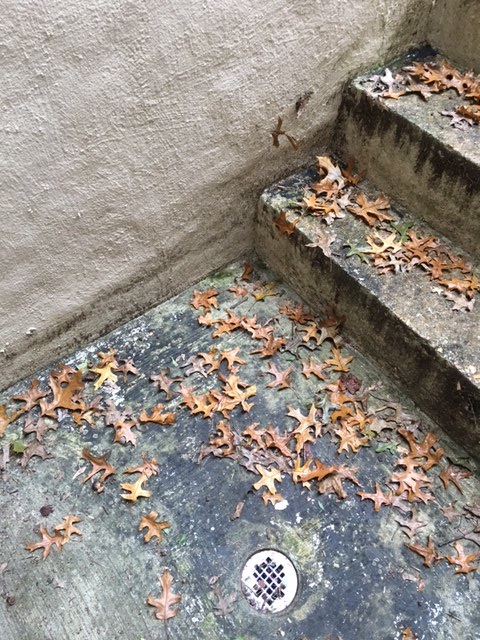
Always clear the French Drain and entry area outside your basement area of leaves to make certain water does not collect.

basement

Buying a Home? Insuring Your Investment.

Finding and buying a new home is as exciting as it is stressful: The purchase of a home is a huge undertaking that requires a good deal of forethought and research.   Once you’ve taken the time to find that new home,  you’ll want to make certain it’s insured correctly.

While the paint colors and furniture arrangement may be foremost in your mind, the insurance company and agency you choose to protect your investment is just as important

The insurance agents at Peter B. Crilly & Associates, Nationwide Insurance can help make the process  of purchasing and moving into a new home as smooth and stress-free as possible.

Contact your insurance agent in advance, to get a quote on the cost of homeowner’s insurance before you complete the purchase of your new home.

Every lender requires that you have homeowner’s insurance in place when you go to the settlement table.  If you don’t plan in advance, your mortgage company will step in and  provide coverage.  The company they choose may not have the most favorable rates and thus you’ll be paying a higher premium. While the cost of property insurance may be rolled into your monthly mortgage payments, the amount you pay and the type of coverage you receive can vary greatly.

house__colonial_2

Peter B. Crilly & Associates can help you find the right protection at the best rate for your new home. All you have to do is get us involved early and provide the information to give you a timely quote.

Some of the factors that will make a difference in the cost of a homeowner’s policy include: 1) The distance your home is from the nearest fire station and fire hydrant.   The further away the nearest fire station and/or fire hydrant  is located, the higher the rate.   If you  were ever to have a fire, every second counts.  With no fire department nearby, the risk for a major or total loss of your home is much higher.  2) The existence of any “attractive nuisance” such  a trampoline or a swimming pool can affect the cost and availability of homeowner’s insurance.  Places  where someone could get injured are cause for concern.  If you have a pool or a  trampoline, you will be required to have a secure fence . 3) The proximity of your new home to an area likely to flood will impact your insurance costs.  If you house is located in a flood plain, you’ll be required by your lending institution to purchase flood insurance. Get a flood insurance quote from Peter B. Crilly & Associates to help you calculate your costs in advance.

A monitored fire and security alarm will help to reduce the cost of homeowner’s insurance. If your new home does not already have one, consider purchasing an alarm system.

Is the home you are purchasing part of a homeowners association?  If you are required to join your homeowner’s association, check the master policy. Find out what the Master policy covers. You may be asked to pay a share of a liability claim if the loss exceeds the coverage of the master policy. Your homeowner’s policy can be adjusted to cover that potential cost. That is what insurance is for. Ask your friends at Peter B. Crilly & Associates. We’re here to help